
Between Two Worlds: The Basque Country and the Second World War
The Basque people found themselves facing off against Fascism in two different wars. Their struggle to survive is one of the lesser-known stories of the Second World War.

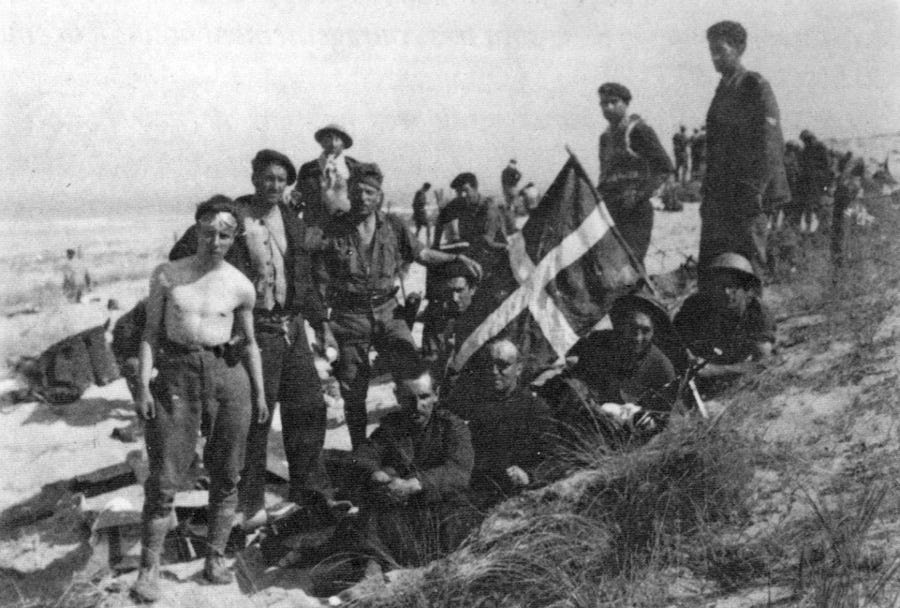
The Basque Country in the Spanish Civil War
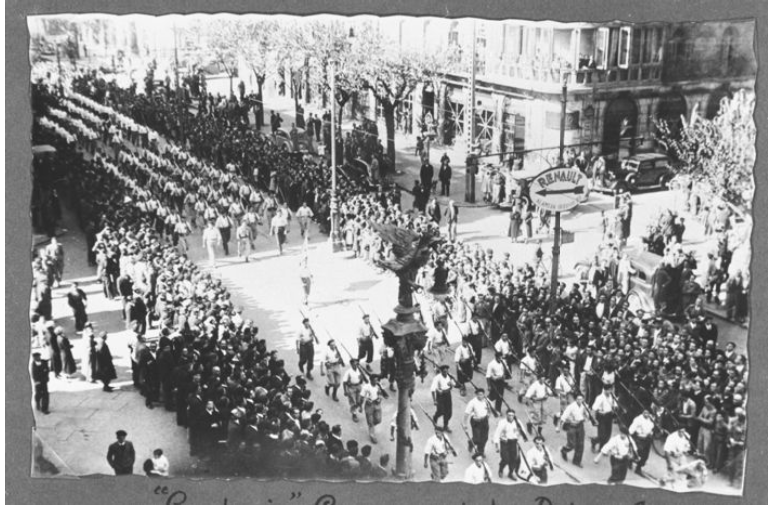
Straddling the border of France and Spain, the Basque Country has long been home to millions of French and Spanish citizens who historically comprised different communities. The main inhabitants of this territory were the Basque people, an ethnic group with their own language and culture that had been forced to assimilate into Spanish and French culture in a process that lasted centuries. Other communities, either recent migrants or indigenous communities with roots dating back before the Reconquista, managed to live alongside the Basques despite the chaos of the 19th and early 20th centuries.
Most of the Basque Country is located in Spain, with a smaller strip of territory located over the Pyrenees in France. The rebellious nature of its people, many of whom sought either autonomy or independence from both governments, made many Basques sympathetic to revolutionary ideas on the right and left. This was especially the case in Spain, where the early 20th century saw the rise of Fascism, Communism, Socialism, and Anarchism. For the Basques, there were several options: the Carlists, who opposed the Republic and wanted to establish a monarchy based on the successors of Don Carlos (the Count of Molina), the parties of the left who comprised the government alliance, the Falangists, and lastly, the Catholic Basque Nationalist Party (PNV). Throughout the war, reaching the Pyrenees was a major goal of the Falangist movement so that the Republicans could be cut off from being resupplied via France.
In 1937, the Falangists and their German/Italian backers managed to overcome the Republican and PNV defenses in the north. This led to a total collapse of the Basque autonomous zone set up by the government in Madrid. Some half a million Spanish Republicans fled north into France, fearing that the Falangists would imprison or murder them. Some estimates indicated that as many as 150,000 of these were Basque people. General Francisco Franco, embittered by the decision of many Basque locals to oppose his army’s advance, set about quashing Basque nationalism. This contributed to the rise of additional separatist groups, such as ETA, later in the 20th century.
Sources:
https://ehrafworldcultures.yale.edu/cultures/EX08/summary
https://commons.und.edu/theses/1073/
https://www.vscw.ca/en/node/348
https://www.robertspublications.com/blog/the-war-in-the-north
https://www.theguardian.com/world/2019/feb/09/franco-spain-refugees-haunted-by-the-past-retirada
The Basques during the Invasion of 1940
By the time the Germans invaded France, there were still hundreds of thousands of Spanish citizens, including Basques, in the country. Many of them had been confined to internment camps after fleeing the Falangists, such as Gurs. Some 6,000 Spanish Basque refugees were kept in the camp, which the Germans would keep open after their conquest. Hoping to gain their support in the face of the German offensives, France let out a lot of the refugees from these camps as long as they assisted the war effort. Tens of thousands joined the French Foreign Legion, especially the 13th FFL Demi-Brigade or labor battalions used for constructing defenses on the Maginot Line. French Basques faced none of the restrictions their Spanish counterparts faced and many of them were able to join the French military as soon as they were called up.
Despite the Allies’ best efforts, German forces overran much of France. By June 1940, German forces reached the Spanish border as the Third Republic collapsed. As part of the armistice agreement reached by Germany and the Vichy French government, the French Basque Country was split into two zones. One area closest to the coast was made part of the German-occupied zone. Locals, including Basques from both sides of the border, were ordered to report for work duty to start building Germany’s Atlantic Wall.
Deeper inland, the rest of the French Basque Country became part of the Vichy zone. Many French Basques were pleased with this arrangement, as it allowed them to be ruled over by fellow Frenchmen, even if they were collaborators. However, the Spanish Basques were horrified. They feared that the Vichy and Nazi regimes would turn them over to Franco, along with other Spanish Republican refugees. As a result, many attempted to flee mainland Europe entirely or hid in the woods until they could develop a resistance network. The gulf between both groups proved to be a challenge that prewar Basque politicians from both countries struggled to tackle. For instance, the Basque Nationalist Party was in disarray after its expulsion from the Iberian Peninsula and its leader, José Antonio Aguirre, was forced to flee France for America when the Germans entered the city.
Sources:
https://www.vscw.ca/en/node/366
https://balagan.info/spaniards-in-french-service-during-ww2#:~:text=France%201940%20%E2%80%93%20French%20Army%2C%20Foreign,from%20a%20fleeing%20French%20unit.
https://english.elpais.com/travel/2025-07-30/the-atlantic-wall-a-concrete-barrier-with-the-strength-of-straw.html
https://www.h-net.org/reviews/showrev.php?id=50482
https://english.elpais.com/elpais/2016/10/11/inenglish/1476196791_317656.html
https://basquetribune.com/agirre-was-the-most-important-basque-politician-of-the-20th-century/
Basque Collaboration during the Occupation
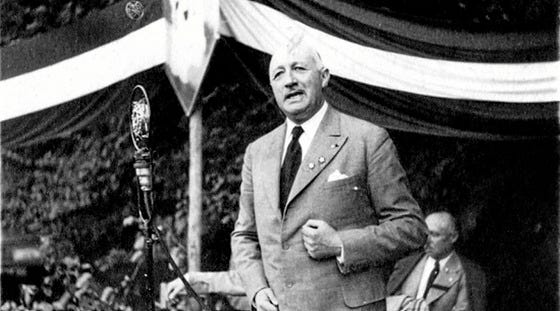
As part of its effort to gain support throughout France, the Vichy government of Marshal Philippe Pétain and Vice President of the Council Pierre Laval promoted a policy of regionalism. This was designed to ensure that people in the Vichy-controlled zone felt that they could be loyal to the new government. Additionally, it promoted reactionary policies that promoted old-school conservative French nationalism. This agenda proved to be popular with a large element of the French Basque community in the Pyrenees. They felt that the Vichy government was promoting causes that they supported and was protecting their rights to live autonomously.
While collaboration among the Spanish Basques was very rare, it was relatively common among French Basques. For instance, the first Minister for Veterans and the Family was the prominent French Basque politician Jean Ybarnégaray. In 1939, when Spanish refugees poured over the border, he turned a cold shoulder towards them, including his fellow Basques. In his mind, the refugees were Communists coming to start a Red revolution in Paris. When the Vichy government was formed, he happily aligned himself with the new regime in exchange for Pétain agreeing to support Basque autonomy. Additionally, the French Basque tennis player Jean Borotra became the Vichy Minister of Sports in 1940. The French Basque movement known as the Eskualerristes endorsed the Vichy program through its newspaper called “Aintzina”. When the Vichy government collapsed in 1942, the German and Italian armies took control of southern France. Many of these collaborators continued to work with the Axis armies, though some of them turned coat and became resistors.
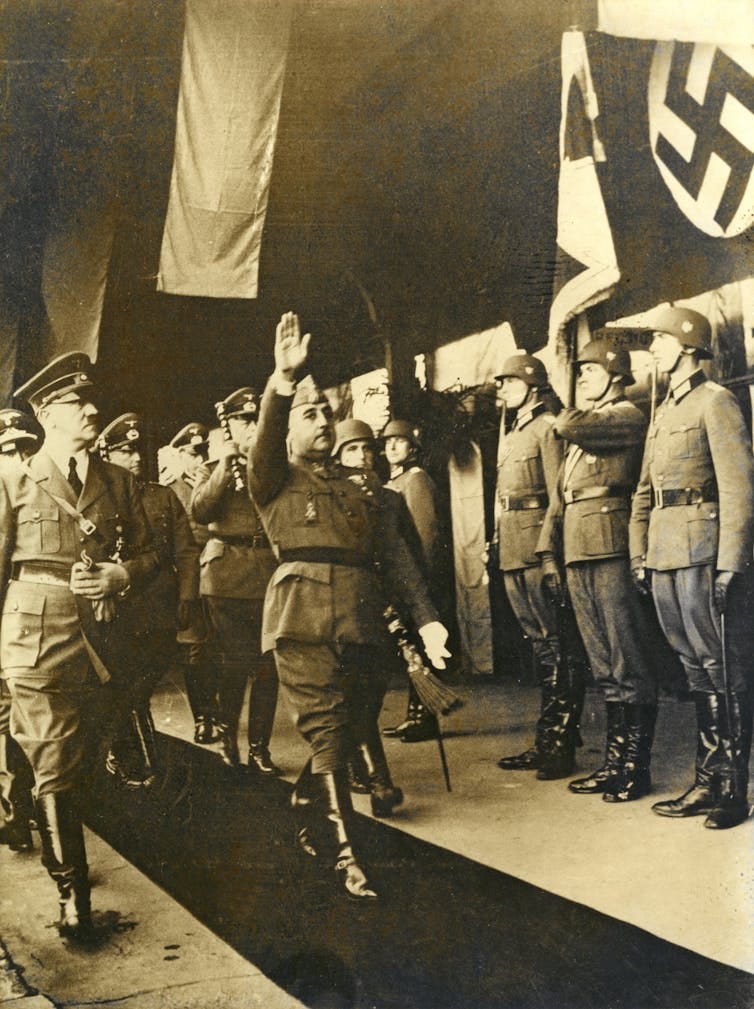
The Germans developed an odd fascination with the Basques. Some race scientists with ties to Berlin claimed that the Basques were “Mediterranean Aryans”. There were theories that they had genetic ties to German people. When Adolf Hitler met with Francisco Franco during the war, they went to the city of Hendaye in the French Basque Country, where they discussed attempting to get Spain to join the Axis war effort. Despite Franco’s lack of commitment to doing this, Hitler agreed to his request to tamp down support for Basque nationalism. Franco still resented the fact that most Spanish Basques opposed his takeover and sought to crush their community. Hitler, eager to gain his support, ordered his generals to avoid making too many promises to the Basques in southern France. Nonetheless, the Nazi fascination with the Basques remained strong and, in 1944, the film Im Lande der Basken was shown in German theaters to idolize the Basque people and affirm their racial ties to Germany.
Sources:
https://www.smithsonianmag.com/history/vichy-government-france-world-war-ii-willingly-collaborated-nazis-180967160/#:~:text=%E2%80%9CI%20think%20the%20best%20term,began%20managing%20affairs%20more%20directly.
https://encyclopedia.ushmm.org/content/en/article/france#:~:text=In%20theory%2C%20measures%20of%20the,%2C%20law%2C%20and%20teaching).&text=%22Aryanization%22%20in%20France:%20this,et%20Internes%20Resistants%20et%20Patriots
https://aunamendi.eusko-ikaskuntza.eus/en/ybarnegaray-jean/ar-144091/
https://buber.net/Basque/2021/01/24/basque-fact-of-the-week-jean-borotra-the-bounding-basque/
https://epdf.pub/download/war-judgment-and-memory-in-the-basque-borderlands-1914-1945-the-basque-series.html
https://eprints.lse.ac.uk/26101/1/Franco%20and%20Hitler(lsero).pdf
https://puntodevistafestival.com/en/film/im-lande-der-basken
The Basques in the Resistance and the Allied Armies
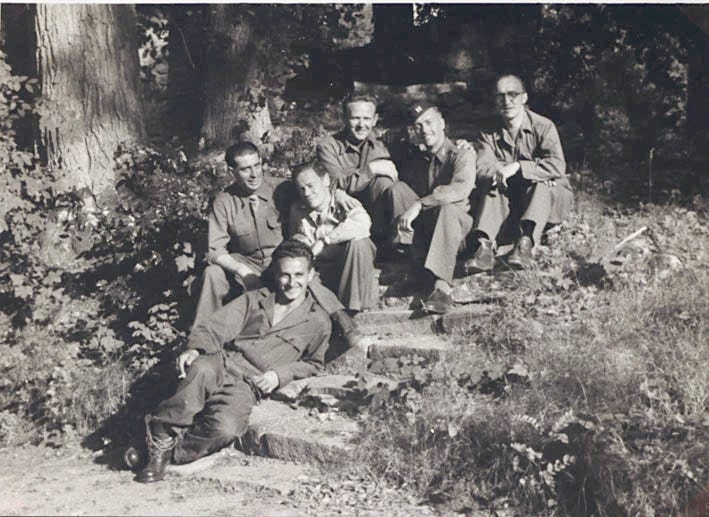
While the war ground on and it became more apparent that the Allies were coming closer to liberating France, more Frenchmen started to participate in resistance activities. In this regard, they were supported by a large contingent of foreigners who were in France before the 1940 invasion. This included Spanish republican dissidents who had survived the Nazi assault. The exact numbers are not known, but it is estimated that around 60,000 Spaniards fought in the French resistance. This did not include Spanish citizens who fought in the French Army of Africa later in the war, in the British Army, and republican members of the Soviet Army as well. The Spaniards proved to be very formidable and ruthless. According to the American reporter Martha Gellhorn,
During the German occupation of France, the Spanish Maquis engineered more than four hundred railway sabotages, destroyed fifty-eight locomotives, dynamited thirty-five railway bridges, cut one hundred and fifty telephone lines, attacked twenty factories, destroying some factories totally, and sabotaged fifteen coal mines. They took several thousand German prisoners and - most miraculous considering their arms - they captured three tanks. In the south-west part of France where no Allied armies have ever fought, they liberated more than seventeen towns.
The Spaniards included large numbers of Basque veterans of the Civil War. Their hope, along with the other Spaniards, was to create a safe zone north of the Pyrenees that could be utilized when they invaded Spain again to topple Franco’s regime. The Basques had an additional motive: they hoped to gain Western support for Basque autonomy. When the Vichy regime collapsed in southern France, the French/Spanish resistance took advantage of the brief vacuum to snatch up as many weapons as they could. Subsequently, an increase in attacks on German and Italian garrisons made the Axis position in the country more precarious. Italy’s surrender to the Allies, along with the D-Day and Dragoon landings, enabled the resistance to transition from conducting small-scale raids to fighting alongside the Allied armies as a light infantry force.
Exactly how many French or Spanish Basques fought in the resistance is not known, but their contribution was notable and remarked upon by none other than Charles de Gaulle himself. The most famous Basque resistance unit to fight the Germans was the Gernika Battalion. Formed in 1944, this unit was assigned to assist other resistance and regular army units in clearing out a German garrison in Pointe de Grave in the Gironde Estuary. The operation proved successful and the maquisards were applauded for their ruthlessness and tenacity. Other Basques found themselves fighting against the Germans in the Vosges Mountains and Alsace-Lorraine.
Sources:
https://libcom.org/article/1939-1945-spanish-resistance-france
http://beretandboina.blogspot.com/2013/02/spanish-maquis.html
https://theanarchistlibrary.org/library/anonymous-forgotten-heroes-spanish-resistance-in-france-1939-45
https://guides.loc.gov/french-resistance-world-war-two#:~:text=Unification%20of%20the%20Resistance,on%20D%2DDay%20in%201944.
https://warfarehistorynetwork.com/article/rampage-on-the-river-operation-dragoon/
https://www.fightingbasques.net/en-us/Gernika-Battalion
http://foreignlegion.info/french-foreign-legion-in-world-war-ii/
Smuggling in the Basque Country during the War
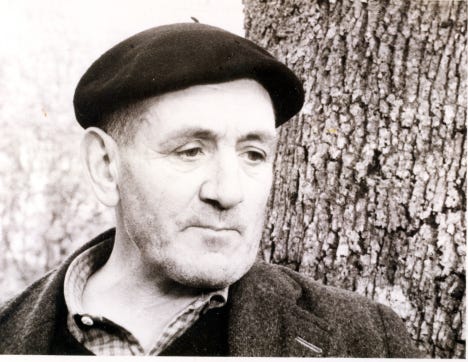
Historically, several passes in the Pyrenees Mountains were major smuggling routes because they were difficult to patrol and the locals were familiar with the trails. These smuggling routes proved particularly useful during the Axis occupation. Downed Allied pilots, escaped POWs, Jews, and anyone else being hunted by the Axis armies and their collaborators could flee to neutral Spain and Portugal through the passes. They were fortunate that the French and Spanish Maquis had support from several networks of smugglers in the region. Many Basques on both sides of the border made a living smuggling goods and people through the mountain passes and were able to help the Resistance and the Allies get people away from their pursuers.
In 1941, members of the Belgian and French resistance formed a network known as the Comet Line that helped fugitives escape. Led by Countess Andrée de Jongh, the organization smuggled thousands of people to the Pyrenees until many of its members were arrested and killed. To get through the mountains, they relied on several Basque locals, including the indomitable Florentino Goikoetxea Beobide. Beobide was a Spanish Basque refugee from Franco who agreed to help de Jongh get refugees over the border. Working with Belgian resistor Elvire de Greef and Basque maquisard Kattalin Aguirre, he successfully got hundreds of people over the border until he was shot and arrested. de Greef managed to get him out of German captivity and he went into hiding until the end of the war. Another Basque woman who helped the Comet Line network was Francia Usandizanga. Before she was arrested and sent to her death in Ravensbrück concentration camp, she operated a safe house for escapees.
Some other mugalariak (Basque word for smuggler) assisted the Nightingale Network, another organization devoted to smuggling refugees out of occupied Europe. Many Jews escaping the Nazi roundups went through the Pyrenees, often with the assistance of local guides. Later in the war, when Spanish Maquisards began infiltrating back into Spain to start an insurgency against Franco’s regime, they received assistance from Basques living in the area, who retained a fervent hatred of the regime for its brutal treatment of them.
Sources:
https://www.pyreneanexperience.com/basque-smugglers-and-tomatoes/
https://www.hadassahmagazine.org/2016/03/28/passage-over-the-pyrenees/
https://www.pyreneanexperience.com/comet-line-crossing-of-the-pyrenees/
https://buber.net/Basque/2022/01/23/basque-fact-of-the-week-florentino-goikoetxea-smuggler-of-allied-airmen-in-wwii/
https://ww2escapelines.co.uk/the-comete-trail/
https://www.barcelona-y-daytrips.com/nightingale-wwii-escape-route-pyrenees/?srsltid=AfmBOop-MciL8mtK3pmmGsyNcKyctV0jri-Jte-nXTjwW3AUspx-O7tV
Marcelo Usabiaga: A Basque in Mauthausen
Having been aligned with Franco during the Civil War, the Germans knew what kind of threat the exiled Republicans in France posed to their military activity. Thousands of Spaniards who fought in the French military in 1940 ended up in POW camps or worked for the Germans on fortifications throughout occupied France. Some, however, were considered so dangerous that they were put into concentration camps across the Reich. Over 10,000 Spaniards went to camps such as Mauthausen and Sachsenhausen. Some even went to the gas chambers in Auschwitz and Treblinka. The Germans deported these people with the full knowledge of Franco’s regime, who was more than happy to see its enemies disappear.
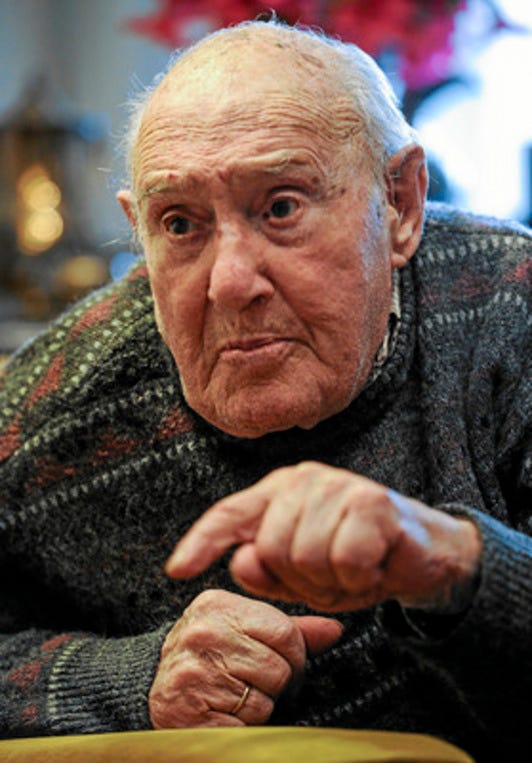
Several hundred Basques were caught up in the Nazi dragnets: trade unionists, Basque nationalists, politicians, resistance fighters, and others. One of the most famous was the Basque Communist leader Marcelo Usabiaga. Born in October 1916, Usabiaga was a Spanish Basque native of the town of Ordizia who became a senior member of the Communist Party of Euskadi, the Basque element of the Spanish Communist Party. After fleeing the Falangist victory in 1939, he arrived in France and was subsequently arrested by the Germans in 1940. His political history made him dangerous in the eyes of the Nazis and he was sent off to Mauthausen. There, he toiled in manual labor alongside tens of thousands of prisoners of different backgrounds. Those who were not sent to the gas chambers were required to do grueling amounts of physical work. Usabiaga suffered at the hands of the German guards, but he managed to join an underground network run by other Spaniards in the camp. They worked to gain supporters from the other camp prisoners and silently resisted the Germans from within. Usabiaga was lucky to remain alive by the time American forces liberated the camp. Between 4,000-5,000 Spaniards died at Mauthausen, a majority of the Spanish contingent in that camp. This included most of the Basque prisoners sent there. Usabiaga returned to Spain to continue fighting against the Franco regime, being arrested again and sent to another prison. Notwithstanding the ruthlessness of the Franco regime, he still survived and lived through the Spanish transition to democracy in the 1970s.
Sources:
https://war-documentary.info/mauthausen-memorial-in-almeria/
https://www.theguardian.com/world/2023/jan/26/madrid-exhibition-tells-story-of-spaniards-sent-to-nazi-concentration-camp
https://www.noticiasdegipuzkoa.eus/gipuzkoa/2012/05/04/irun-edita-libro-vida-novela-4400469.html#:~:text=Irun%20edita%20en%20libro%20la,del%20veterano%20comunista%20Marcelo%20Usabiaga
https://ahaztuenoroimena.com/tag/marcelo-usabiaga/#:~:text=Marcelo%20Usabiaga%20Jauregi%2C%20(Ordizia%201916,Oviedoko%20kartzelan%20zenbait%20egun%20egiteko.
https://english.elpais.com/elpais/2019/08/09/inenglish/1565343422_748912.html
https://www.machadolibros.com/libro/cava-y-calla-marcelo-usabiaga-luchador-antifascista_617412#:~:text=%C2%A1CAVA%20Y%20CALLA!,9788412514506%20Machado%20Libros
Recognition of the Basque Struggles in WWII
The experiences of the French and Spanish Basques during the war did not go unnoticed. After the war ended, Charles de Gaulle stated in a speech, “France will never forget the sacrifice of the Basques for the liberation of our land”. The French government offered permanent residency and citizenship to Spaniards who fought in the Maquis or in the military. This included Basques, many of whom still hoped that the Allies would help them topple Franco and grant them autonomy. However, the Western Allies were starting to focus their attention on deterring the Soviets and began to view Franco’s regime in a different light. By the 1950s, most Western nations had normalized relations with Madrid and the Spanish exiles found that the external support they received was waning. This caused great resentment amongst the exiles, but they continued fighting the regime until Franco died in 1975.
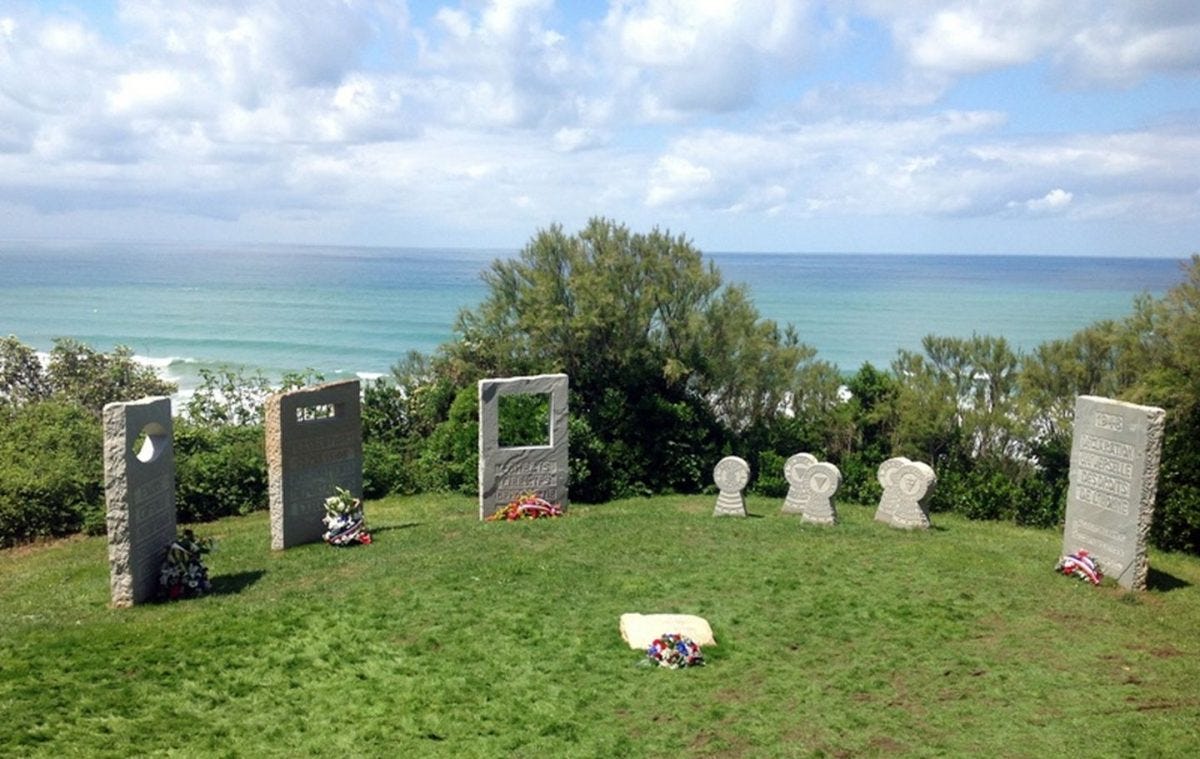
For many years, the experiences of Basque people were overshadowed by the suffering of the French and Spanish publics at large. In France, the official record was that most French citizens resisted and the experiences of foreigners in the Maquis were downplayed. In Spain, the suffering of the Basque people at the hands of Franco’s regime, the Nazis, and the Vichy government was overshadowed by the rise in terror incidents by Basque nationalists in groups like ETA. In recent years, efforts have been made to commemorate the Basque experiences and address the issues of collaboration. In 2010, the French government built the Departmental Memorial for the Second World War and for Peace in Bidart, the Basque Country. The memorial honored the Spanish Republicans, French victims of Nazism, and Jews who were caught in the region. In Spain, memorials were put up in the city of Guernica to commemorate the victims of the Luftwaffe’s bombing in 1937. Florentino Goikoetxea Beobide and other Basque guides received a plethora of awards from the French and British governments for their assistance to the Comet Line. Despite these attempts to increase attention to the Basque Country’s experiences in the 1930s-1940s, much of the historiography of the Second World War still ignores the story of what happened there. New efforts at remembrance have helped shine a light on people’s stories.
Sources:
https://www.travelletter.net/basque-southern-france/being-basque-during-world-war-ii/#:~:text=Boats%20docked%20at%20St%20Jean,Target%20%231:%20Bilbao
https://countrystudies.us/spain/24.htm#:~:text=As%20the%20United%20States%20became,church%20recognition%20of%20Franco’s%20government.
https://www.washingtonpost.com/archive/politics/1979/11/11/grudge-left-from-world-war-ii-may-cloud-basque-us-ties/f801e9c5-6f98-4590-ab9f-b1fc7f965736/#:~:text=Garaicoechea%2C%2040%2C%20who%20epitomizes%20the,to%20the%20integrity%20of%20Spain.%22&text=We%20asked%201%2C000%20Americans%20who,Here’s%20what%20they%20said.
https://www.historynet.com/french-resistance-resistant/
https://www.cia.gov/readingroom/document/cia-rdp85s00316r000300110004-3
https://www.bidarttourisme.com/en/patrimoine-culturel/memorial-departemental-de-la-seconde-guerre-mondiale-et-pour-la-paix/
https://www.tracesofwar.com/sights/90550/Memorial-Bombardment-Guernica.htm
https://ww2escapelines.co.uk/escape-lines/pyrenees-spain/spain/